
AI Content & Automation
AI content workflows with briefing, quality gates and brand voice
Create AI content without generic off-the-shelf copy: workflows for research, draft and editing – faster, search-strong and with human polish.
Short answer
AI speeds up content – but only with briefing, data, and editing. I build workflows where models deliver drafts and humans secure quality, brand voice, and facts. Result: often significantly less time per asset with clearer, search-strong copy instead of interchangeable ChatGPT standard.
The mistake isn't using AI. The mistake is setting AI instead of thinking, planning, and checking. Whoever types "write me an article about X" and publishes produces mediocrity. Whoever puts keyword data, briefing, and quality gates upstream gains speed and quality – measurable in hours and in outcome quality.
That's exactly the balance I implement and teach teams: AI as a tool for research, structure, and rough draft – responsibility and polish stay human. More depth in my Insights article on the content workflow.
Whether you want to create AI content, speed up SEO copy with AI, or finally use ChatGPT content in a brand-consistent way – the lever isn't the model but the workflow. Content automation pays off when briefing, data, and approval are clear. Otherwise you produce the same generic output as everyone else, only faster.
Keyword clusters for AI content & automation
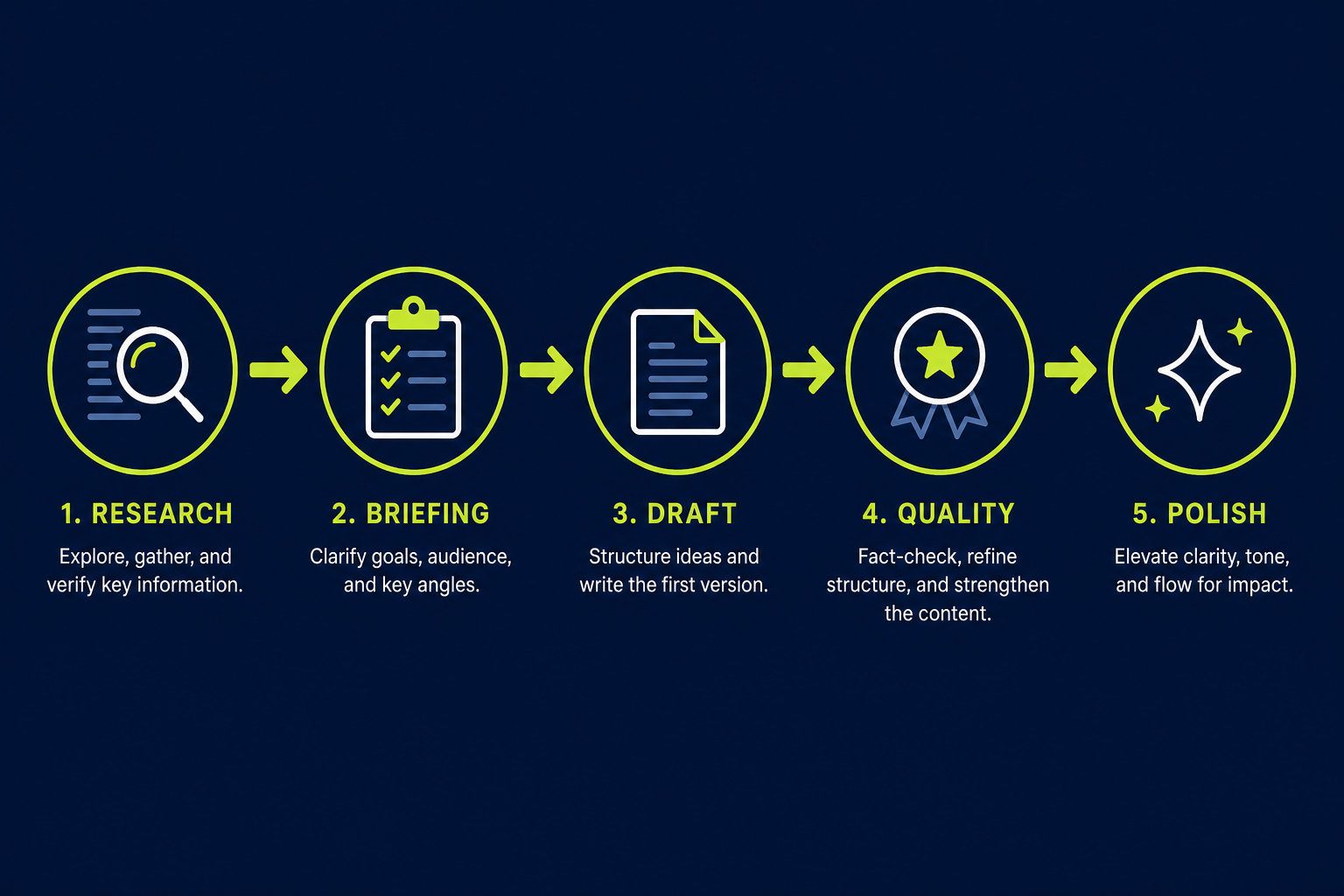
Without demand, even the best model writes into a void. That's why we start with intent and keywords – not with the prompt.
The table shows typical search clusters around creating AI content, ChatGPT content, and content automation. Commercial searchers usually want a process – not another prompt. Informational searchers need honest limits instead of tool hype. Both flow into briefing and quality gates.
| Cluster | Example keywords | Intent | Focus |
|---|---|---|---|
| Core | create AI content, content with AI, AI in content marketing | informational / commercial | workflow, quality |
| Tool entry | ChatGPT content, SEO copy with AI, write ChatGPT texts | informational | how-to + limits |
| Organization | AI content workflow, content automation, editorial plan AI | commercial | process, templates |
| Outcome | create content faster, scale content production | commercial | ROI, setup |
Why most AI copy doesn't perform
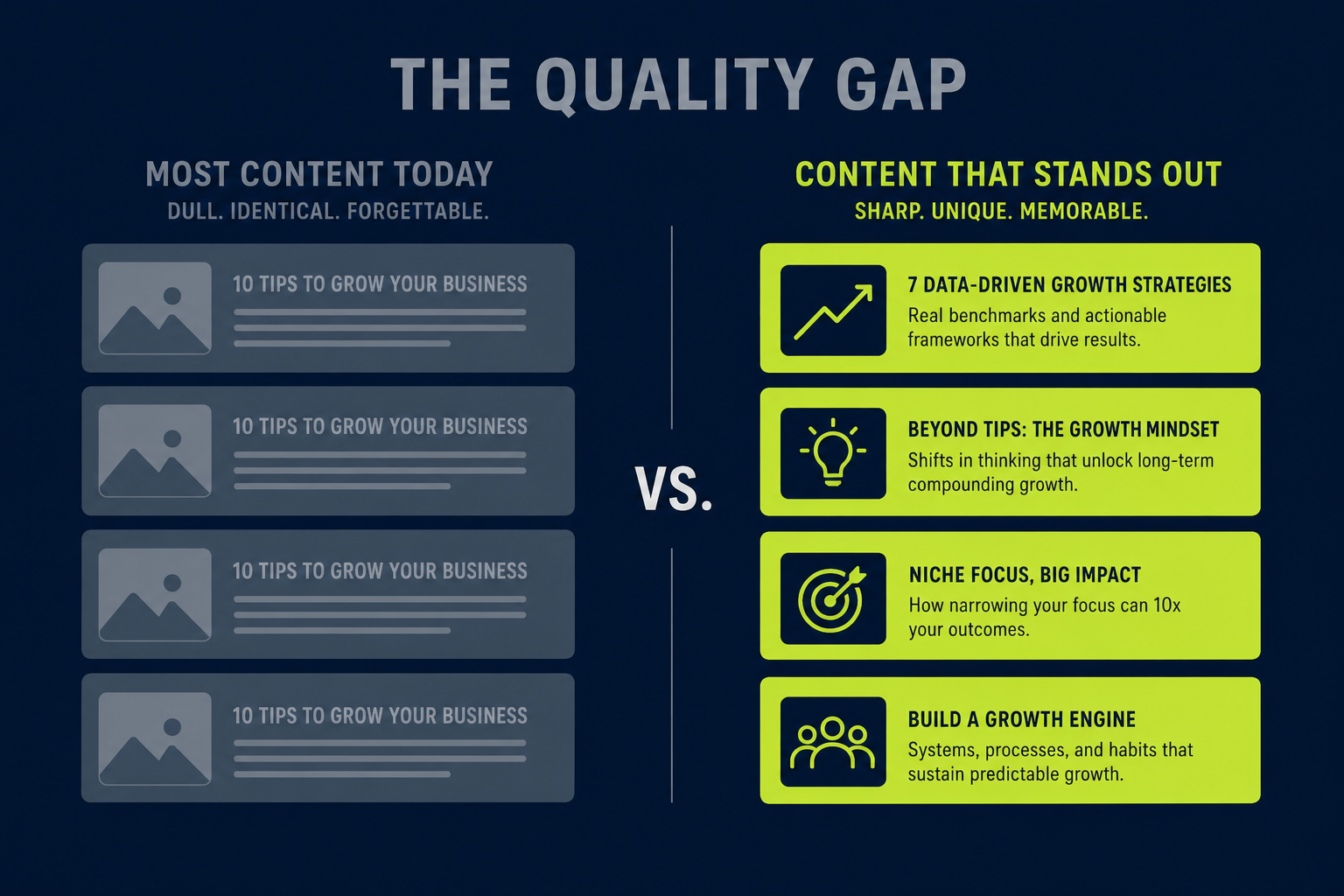
Classic weak spots: no keyword/SERP data, unclear search intent, no brand voice, no first-hand experience, no quality gates. Google doesn't punish AI across the board – Google rewards helpful content. Generic output falls through.
Typical pattern: someone uses ChatGPT content as the final product. Headlines sound smooth, facts are fuzzy, examples are missing. The page maybe ranks briefly – or not at all – and generates no inquiries. SEO copy with AI works differently: the model builds drafts, humans deliver differentiation, sources, and tone.
For content generation at scale MaibornWolff realistically puts time savings at 35–60% per output unit – provided prompt stack, brand voice, and review. Deloitte Digital additionally reports an average of 11.4 hours saved per week among GenAI users. Without review only quantity rises, not the pipeline.
The difference shows in the pipeline: teams with gates publish less but stronger. Teams without gates fill the blog and wonder about stagnant visibility. AI speeds production – it doesn't replace strategy.
The workflow I set up
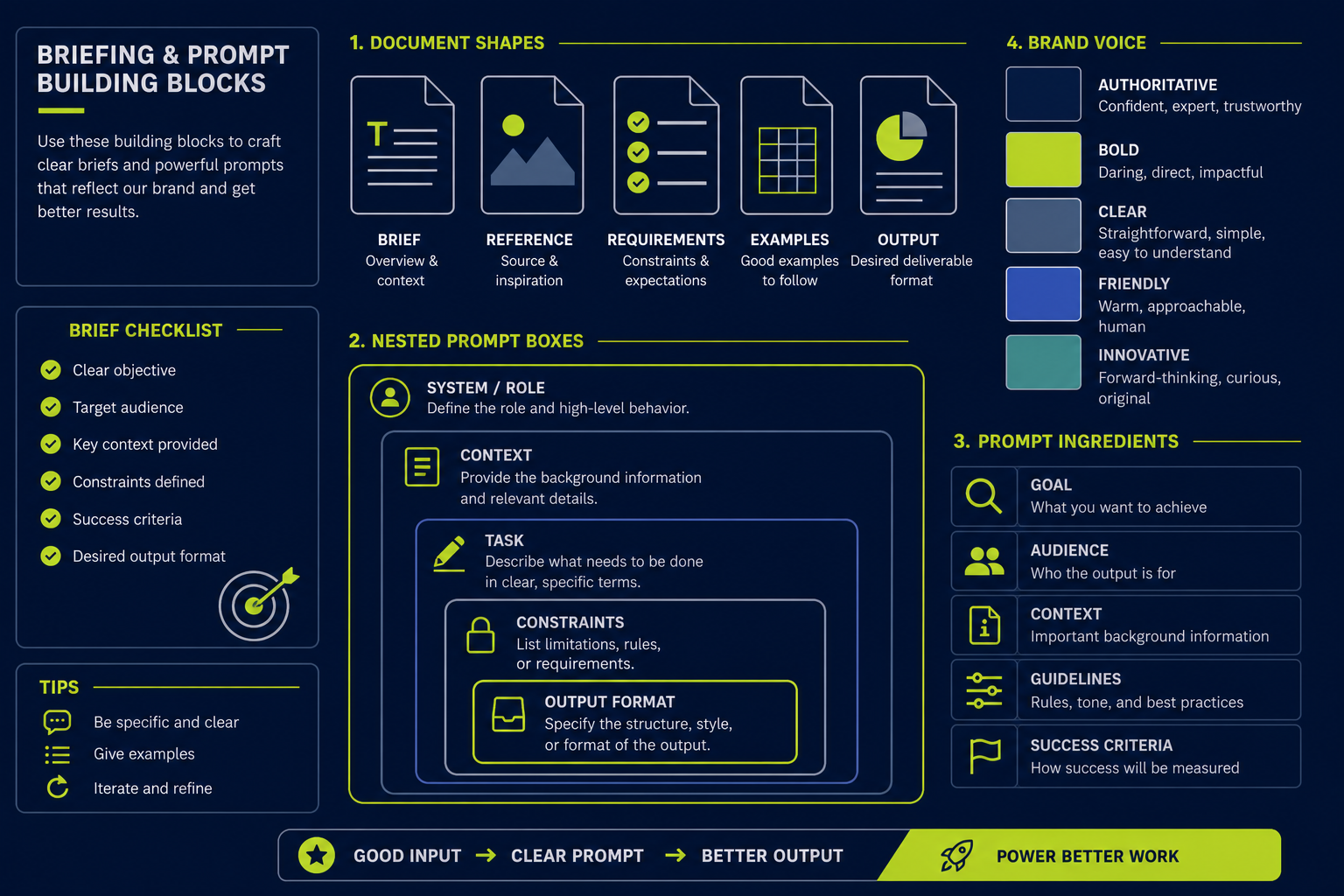
Repeatable and unspectacular – but effective. Every step has a clear outcome; nothing goes live without a gate. That's how creating AI content becomes plannable instead of random.
In practice we often start with one pilot asset: a service page, an FAQ block, or a pillar article. From that come templates for prompt, briefing, and checklist – the basis for real content automation in the team.
- Brief & success criteria: Clarify target audience, one desired action, primary keyword, prohibitions, and claims.
- Pack data: SERP, PAA, internal facts, cases – the denser the package, the less hallucination.
- Briefing & prompt: Tone, structure, examples, prohibitions – not "just write…"
- Rough draft with AI: Outline, draft, variants – never live unreviewed.
- Quality gate: Intent, facts, differentiation, language, SEO/GEO, CTA.
- Reuse: Master content feeds social, mail, FAQ, ad hooks.
What AI can do – and what stays with humans
Strong: research and structuring, ideas and hooks, first drafts, variants, meta copy, rewriting for channels, image ideas. Weak without oversight: current figures "from memory," legal statements, unproven differentiation, invented case stories.
A model can draft. Responsibility for statements, style, and approval stays with me or your team – exactly what we train in training.
In practice that means: AI delivers five headline variants – you pick one and sharpen it. AI sketches FAQ answers – you check facts and tone. AI writes social hooks from a master article – you make sure nothing inappropriate slips through. That keeps speed without losing control.
SEO copy with AI: automation with search intent
Many search for SEO copy with AI because classic production is too slow. The model doesn't know your SERP until you supply it. That's why every asset starts with intent, primary keyword, and the question the page should really answer – not with a generic ChatGPT prompt.
The briefing includes PAA questions, internal cases, and differentiation from competitors. The AI draft delivers outline and rough build; after that we sharpen answer-first, headings, and citable blocks. That's how creating AI content works without copy-paste mediocrity.
Content automation works best in series: same quality gates, same brand voice, different cluster topics. One workflow for service pages, one for FAQ, one for social hooks. Then production scales without reinventing each piece.
If you already produce ChatGPT content but rankings and inquiries don't come, usually not the tool is missing – data, briefing, and editing are. That's exactly where I start. Where needed I connect it with SEO and AI Search & GEO into one continuous line.
Scaling without content spam
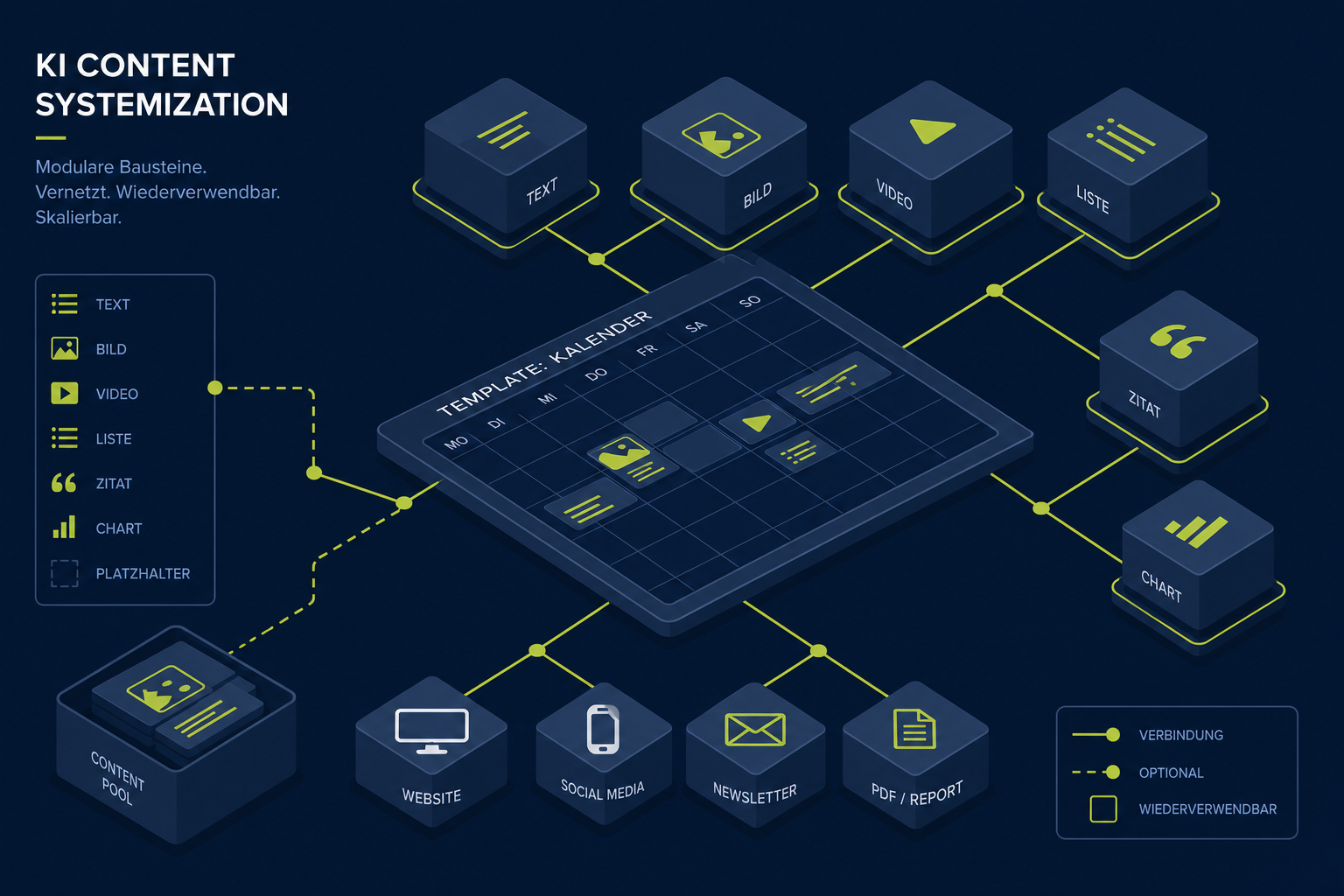
Prompt library, brand voice document, definition of done, and topic clusters instead of random topics. For teams: separate roles (research / draft / edit / approve). If you only celebrate piece count, you train the wrong metric.
Scaling doesn't mean: a new blog post every day. Scaling means: one strong pillar topic feeds subpages, FAQ, newsletter, and ad hooks. AI is especially strong here at rewriting and structuring – provided the master source is solid.
AI content works especially well when SEO and GEO goals are clear – see SEO and AI Search & GEO. Unsure where to start? In the intro call we clarify pilot, workflow, or training.
Typical flow for teams: first one asset end-to-end, then templates and roles, then series production with gates. Content automation grows in a controlled way – instead of as uncontrolled ChatGPT output.
Legal, transparency, and quality assurance
You're liable for published content, not "the AI." That's why labeling duties, copyright, and fact checks belong in the process – especially with synthetic media. Pure text content follows different rules than deceptively real person images; still: working honestly beats tricks.
In practice that means: cite sources, limit claims, no invented case stories, and before publish a gate that checks figures and legal statements. Exactly that discipline separates usable AI production from content spam that costs rankings and trust medium term.
ROI roughly: if an article used to take four hours and the workflow brings it down to two to two and a half, eight assets per month free up 12–16 hours – for better distribution, sharper pages, or tests. ROI turns negative when the gained time flows into more mediocre copy instead of fewer strong ones.
Prompt building blocks I provide are scaffolds: outline with keyword and SERP differentiation, draft with answer-first and length limit, rewrite with fact markers. The more real inputs in the prompt, the less internet average comes back. Details and examples also in the Insights article.
Whether production, workflow setup, or team training is the right entry, we clarify in the intro call. Often the best order is: one pilot asset end-to-end, then templates, then scaling.
In regulated or sensitive industries stricter limits apply: medical, legal, or financial statements need approval processes. AI speeds draft – it doesn't replace compliance. The gate then gets deliberately stricter, not looser.
Image and media production can be part of the workflow as long as style and labeling fit. For web and social I often prioritize abstract, brand-consistent visuals without photorealistic people – that reduces risk and keeps the look consistent.
Another lever is reuse across clusters: one strong service pillar feeds FAQ, social hooks, ad variants, and sales one-pagers. AI is especially strong at rewriting here – provided the master source is solid and approved.
If your team already uses tools but chaotically, I first clean up the process: naming conventions for prompts, storage, approval, style rules. Technology follows the editorial operating system – not the other way around.
In the end it doesn't matter how many words AI wrote, but whether the text gets found, gets read, and builds trust. That's why every workflow ends with a gate that checks SEO, brand, and facts together – not separately in silos.
Your benefit
What AI Content & Automation does for you
Faster to substance
Less typing on the rough draft, more time for sharpness and differentiation.
Brand voice stays
Briefing and editing prevent interchangeable standard tone.
SEO & GEO ready
Intent, structure, and citable blocks thought through from the start.
Knowledge in the team
Workflows and templates you can keep using – not just one-off copy.
Is this a fit?
Who this is especially for
- Teams that need more content without sacrificing quality
- Freelancers who want to use AI but not standard copy
- Companies with a stock of topics but too little production capacity
- Editorial teams that want to professionalize prompt and approval processes
FAQ
Answers about AI Content & Automation
AI helps with research, structure, and draft. Concept, polish, fact check, and final tone I handle personally or with clear quality gates in the team. Unfiltered publishing isn't part of the setup.
Secondary to briefing and editing. Claude is often strong on long, nuanced copy; ChatGPT strong on variants and ecosystem. What matters is your process – not tool hype.
No. AI can cluster and suggest questions. Search volume, difficulty, and SERP reality come from SEO data sources. Without that base even the best model writes past demand.
Through dense data packages, clear prohibitions in the briefing, and a quality gate before publish – including fact check for figures, comparisons, and critical claims.
Yes. In training I work with real examples from your company and leave templates you can reuse.
Best with a free intro call. We clarify whether production, workflow setup, or training is the most sensible entry – often with one pilot asset end-to-end. You bring a real topic; we build the first run with gates, not prompt experiments without a plan.
More services
Let’s move your project forward
The intro call is free and no-obligation. No contract pressure – just an honest assessment on equal footing.