
Conversion Optimization
Raise conversion rate: more inquiries from existing traffic
Conversion optimization (CRO) for copy, structure and landing pages – so visitors from SEO, ads and social become inquiries more often.
Short answer
Conversion optimization (CRO) increases the share of visitors who trigger a desired action – inquiry, appointment, purchase. I sharpen message, structure, CTAs, and landing pages so traffic from SEO, ads, and social works better – often without more budget for clicks.
More traffic alone helps little when the page doesn't convince. Conversion optimization means: visitors understand faster what you offer, why it fits them, and what the next step is – so clicks become inquiries more often.
I review the most important pages and user paths and make sure offer and target page fit – whether the visit comes from SEO, paid ads, or social. Often that's the cheapest lever before budgets rise.
CRO isn't a trick with button colors. It's clarity: message, structure, trust, and one clear next step. Whoever wants to raise conversion rate without taking landing page optimization seriously often buys more expensive traffic for the same result.
Whether homepage, service page, or ads landing page: conversion optimization starts with the question whether visitors understand in the first seconds that they're in the right place – and which action you expect. Everything else is fine-tuning.
Keyword clusters for conversion optimization
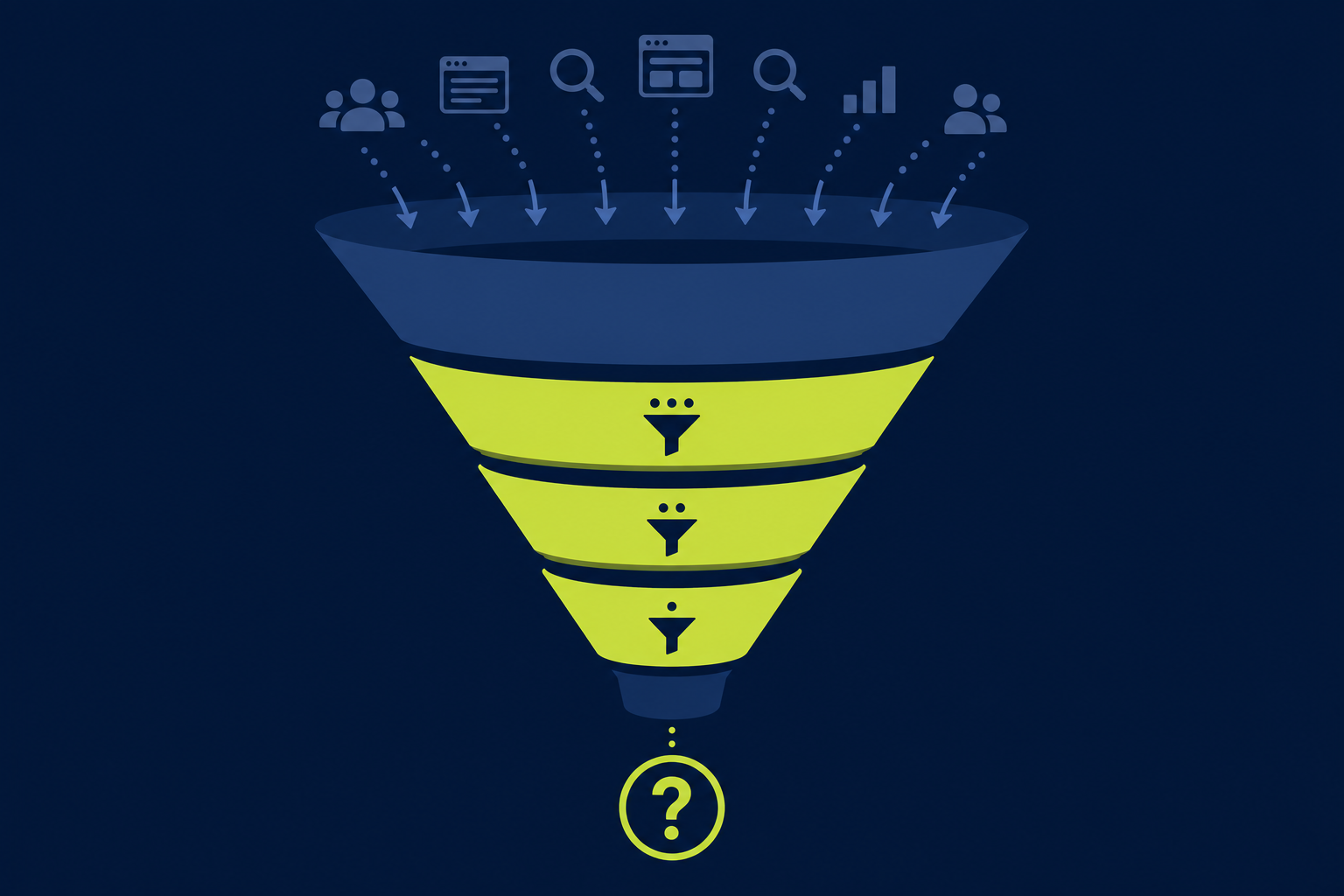
People searching for CRO usually want more from existing traffic – not another channel.
The clusters show typical entries: conversion optimization as strategy, landing page optimization as page work, raise conversion rate as outcome goal. Whoever searches for measurement often needs clarity on the funnel first – not another tool.
| Cluster | Example keywords | Intent | Focus |
|---|---|---|---|
| Core | conversion optimization, CRO, raise conversion rate | commercial | analysis, levers, tests |
| Pages | landing page optimization, form optimization | commercial | message, CTA, friction |
| Traffic fit | ads landing page, SEO conversion | commercial | deliver on promise |
| Measurement | conversion tracking, funnel analysis | informational / commercial | KPIs, tests |
The problem is rarely traffic alone
Many pages get visits – and lose them anyway. Too vague messages, unclear offers, weak CTAs, or landing pages that don't deliver what ads and search results promise. Then you buy visibility without business.
CRO works exactly between attention and inquiry. Instead of immediately running more ads, we make the existing page more effective. That's often the cheapest lever alongside a marketing audit.
Typical scenario: SEO delivers rankings, ads deliver clicks – but the form stays empty. Then it's rarely the channel. The page doesn't explain value fast enough, shows no proof, or makes the next step too hard. Conversion optimization addresses exactly that gap.
How I approach optimization
Focus on the pages and paths that matter for your business – not cosmetic tinkering.
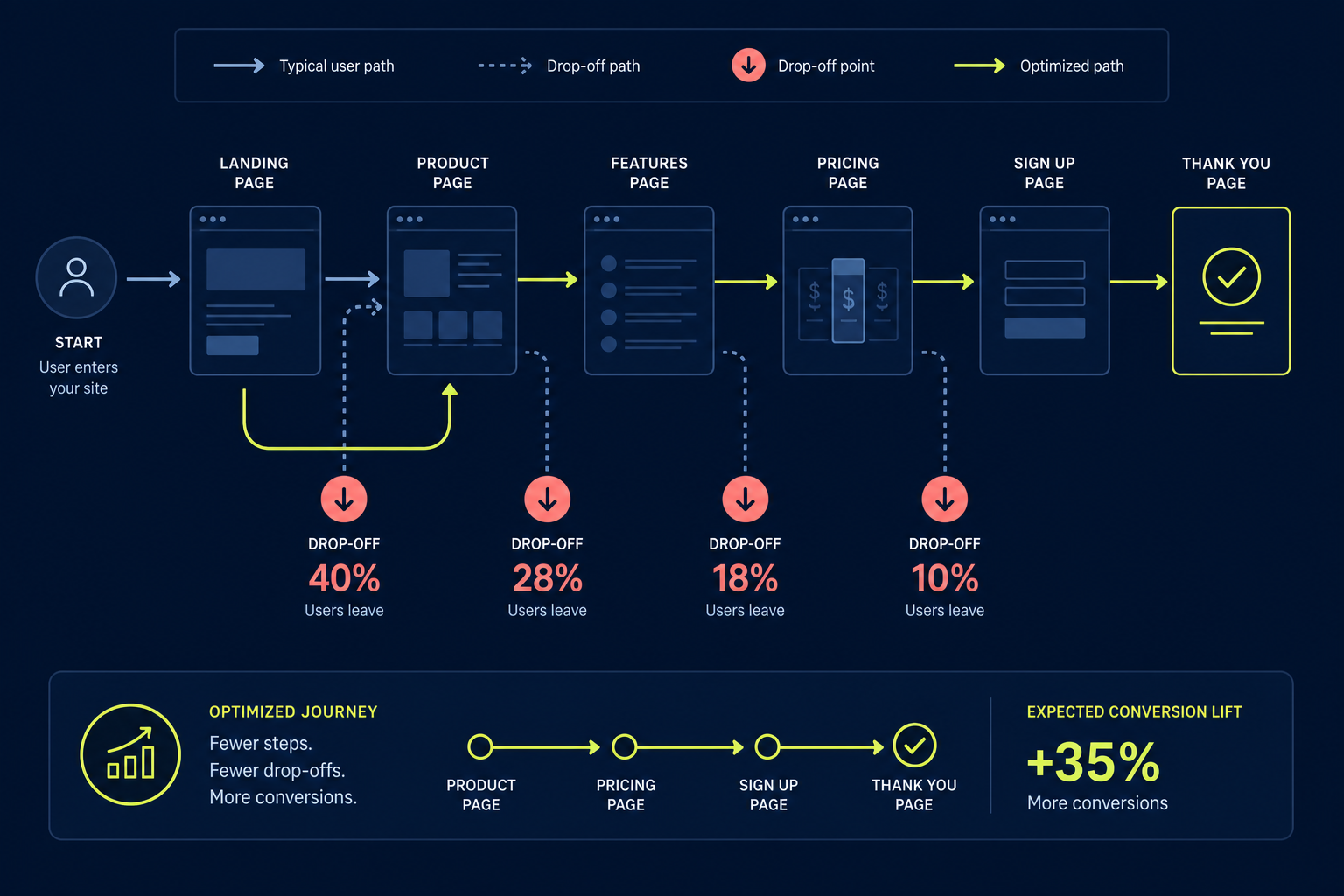
First we clarify the desired action: inquiry, appointment, download, purchase. Then we look where visitors drop off and which information is missing. CRO without a clear goal optimizes past the symptom.
- User paths & page analysis: Where do visitors enter, where do they stall, what's missing for the decision?
- Message & offer: Clearer value arguments instead of generic fluff.
- CTAs & forms: Make the next step easy – less friction, clearer action.
- Alignment with sources: Page and promise from SEO, ads, or social must match – otherwise every click fizzles.
- Prioritization by impact: URLs with traffic and business relevance first – not every subpage at once.
Copy and structure that lead to action
Conversion isn't a button-color myth. What matters is whether a visitor understands in seconds if you're the right solution: clear headings, traceable arguments, credible proof, unambiguous next step.
Especially with offers that need explanation that makes the difference. Where tech or overall structure brakes hard, a website rebuild can make more sense – I'll check that honestly.
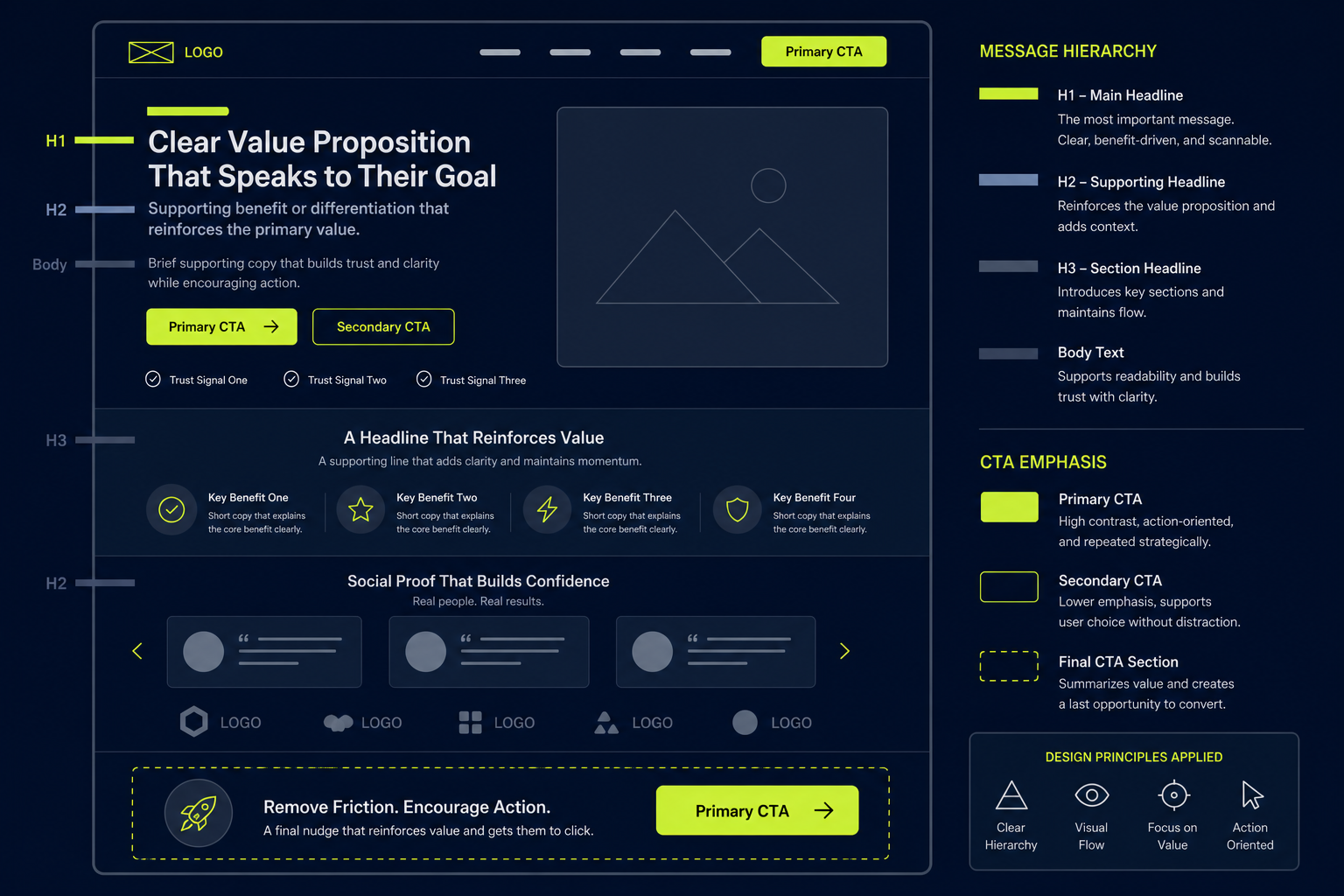
Good landing page optimization follows simple logic: above the fold clarifies value and target audience, below come proof and objections, at the end a CTA without excuses. Everything in between must deliver scannability and trust – not feature walls.
Landing page optimization: deliver on the promise
Ads and SEO traffic often land on the homepage – although the ad or snippet made a specific promise. Then conversion rate breaks because the visitor finds something other than expected. The solution is rarely more budget but matching target pages.
In landing page optimization I check: Does the headline match the entry? Is value clear in one sentence? Is there social proof at the decision point? Is the form as short as possible – and as long as needed?
For paid ads: each ad group deserves a page that delivers its promise. For SEO: search intent and URL content must match. CRO connects both worlds – so traffic from every channel finds the same clear path to action.
If you want to raise conversion rate without buying new visitors, we start with URLs that already have traffic. That's where the fastest ROI often lies – often with copy, structure, and CTA adjustments instead of relaunch.
CRO and marketing audit complement each other: the audit shows whether conversion is the bottleneck; CRO works where traffic is already there but inquiries aren't. Both can be planned sensibly one after the other.
Measurement: count inquiries, not cosmetics
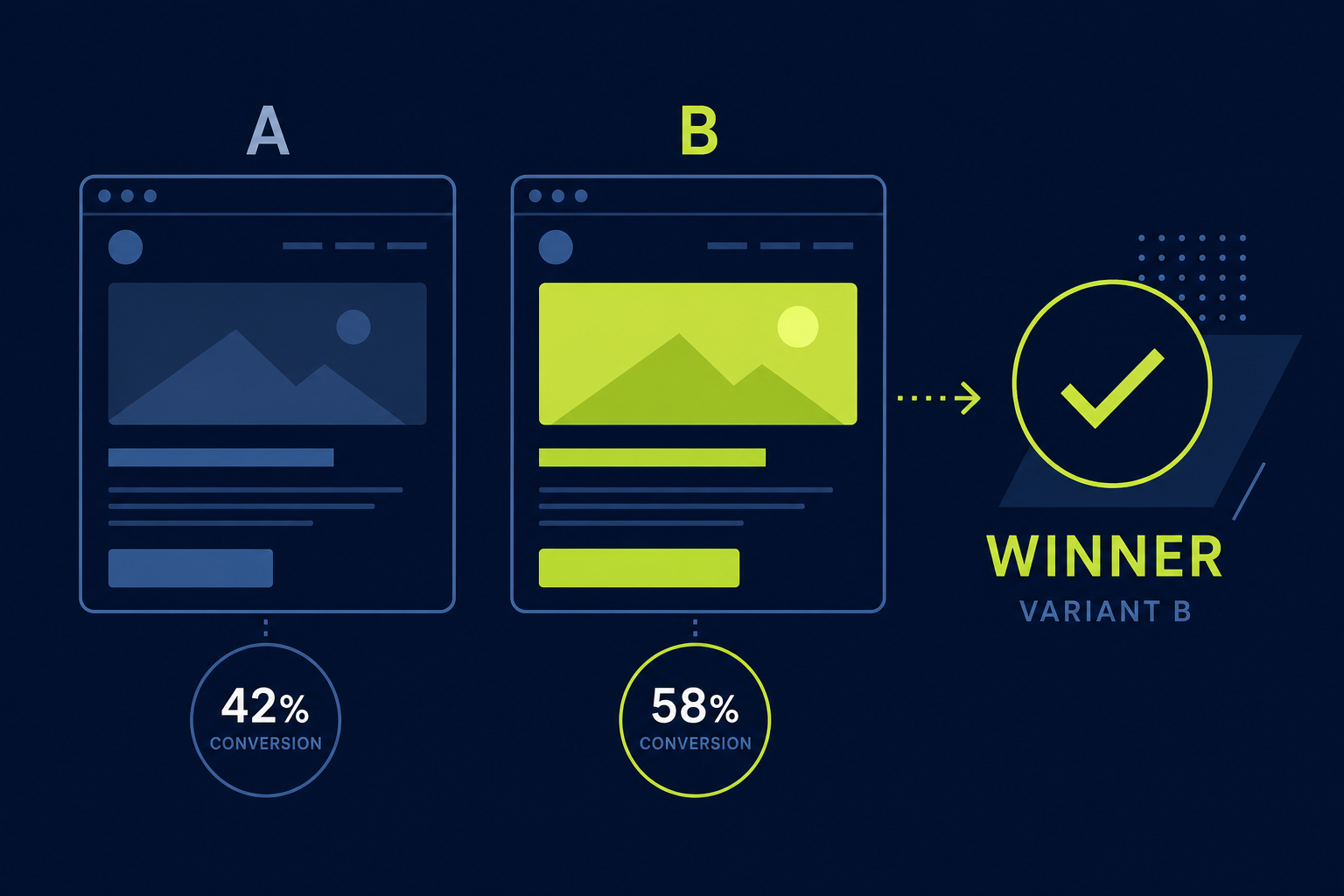
We orient on metrics that mean business: inquiries, form submissions, appointment bookings. Where sensible we compare key pages before and after optimization.
Typical mistakes: only staring at heatmaps without changing message, letting five CTAs compete, sending ads traffic to an unfitting homepage. Better: one clear action per page, deliver on promise, reduce friction.
Conversion tracking must match reality: What counts as a lead? Which pages are key URLs? Without baseline every optimization is guessing. In the intro call we clarify which metric counts for you – and whether enough traffic exists for tests or evidence-based improvements.
CRO lives on iteration: hypothesis, change, measurement, learning. With little traffic I rely on clear, evidence-based improvements instead of weeks-long tests without significance. Goal remains: raise conversion rate with measurable business effect – not vanity metrics.
Typical levers and when relaunch makes more sense
Common quick wins: headline that clarifies the offer in one sentence; benefit instead of feature lists; social proof at the decision point; reduce form fields; make CTA text concrete ("request intro call" instead of "submit"); remove mobile friction.
Deeper levers: information architecture, trust building on service pages, price or process clarity, alignment of ads keyword and landing page intent. Here a short marketing audit often helps before we touch individual pages.
When load times, template chaos, or an impossible CMS structure slow every copy improvement, CRO on the old site is expensive patchwork. Then a targeted rebuild via web development & tools is the more honest path – including conversion logic from day one.
For ad accounts: scale only when the target page carries. Otherwise you optimize bids into a leaky bucket. For SEO: rankings without conversion are expensive visibility. CRO is the bridge between both.
In the free intro call we look at 1–2 key URLs and prioritize levers with the best effort-benefit ratio – before drifting into tests or relaunch debates.
CRO is closely tied to psychology and clarity, but without esoterics: people scan, doubt, and look for the easiest next step. Every ambiguity costs conversion. That's why I formulate offers in target audience language – not internal company speak.
On desktop and mobile friction often differs dramatically. What looks "ok" on a big screen fails on phone with sticky elements, too-small tap targets, or endless forms. I check mobile not as an afterthought.
With multi-step processes (consulting, real estate, B2B offers that need explanation) a button isn't enough. Then we need intermediate goals: download checklist, pick appointment, short qualification. The art is building qualification without scaring off entry.
After optimization review belongs: which pages move inquiries? which message wins? what do we test next? That makes CRO an ongoing learning system – aligned with SEO and ads reality, not as one-off polish.
Conversion optimization pays off especially when you're already visible: service pages with rankings, ads with clicks, social with reach. Then CRO is the lever that turns reach into business – without additional media cost.
With B2B offers and long decision paths I optimize not only the form but intermediate offers: clear process depiction, references, FAQ on typical objections. Whoever wants to raise conversion rate must build trust before the click on "inquiry" – not hope afterward.
Your benefit
What Conversion Optimization does for you
More inquiries without more clicks
You get more from existing traffic – often cheaper than additional ads.
Clearer offers
Visitors understand faster what you do and why they should act.
Better landing pages
Page and promise from SEO, ads, or social interlock.
Focus on business goals
Optimization for inquiries and contact – not cosmetic KPIs or click counts without business effect.
Is this a fit?
Who this is especially for
- Websites with visitors but too few inquiries
- Landing pages for ads that get clicks but don't convert
- Service pages that are accurate but unclear or too long-winded
- Companies that want to improve conversion base before more traffic budget
FAQ
Answers about Conversion Optimization
No. Often targeted improvements to copy, structure, and CTAs are enough. When tech, speed, or overall structure brake hard, a rebuild can make more sense – I'll check that honestly with you.
Some traffic helps prioritization but isn't mandatory. Even before starting ads or SEO it's worth making key pages conversion-ready – otherwise you buy scatter loss later.
Where volume and setup allow: yes. With low traffic we prioritize evidence-based improvements and clear hypotheses instead of forcing tests without significance.
The focus is message, structure, and user path. Where needed I give clear guidance on design, forms, and technical hurdles – or implement suitable adjustments.
Via inquiries, form submissions, appointment bookings, or comparable actions – not clicks alone. Details and baseline we clarify in the intro call.
More services
Let’s move your project forward
The intro call is free and no-obligation. No contract pressure – just an honest assessment on equal footing.