
Google Ads and social ads with a coherent message and landing page – billed fairly by effort, not as a share of ad spend.
Short answer
Paid ads deliver fast visibility – and burn budget when message, offer, and landing page don't match. I concept and write Google and social ads so the whole chain fits, and bill fairly by effort instead of a share of ad spend.
Paid advertising is the fastest path to attention. At the same time the fastest way to lose money when nothing suitable happens after the click. Success rarely depends on budget alone – but on message, offer, and what happens on the page.
Whether Google Ads, Meta Ads, or other channels: I make sure ad and landing page form one unit. Often the problem isn't media buying but the statement. That's why I think ads closely with conversion optimization and bill fairly by effort.
Performance marketing for me means: measurable inquiries instead of vanity metrics. SEA captures demand, social ads awaken it – both need clear hypotheses, clean tracking, and willingness to stop weak variants quickly. Whoever doesn't have the foundation yet is better off starting with a marketing audit or website work before budget burns.
Keyword clusters for paid ads & SEA
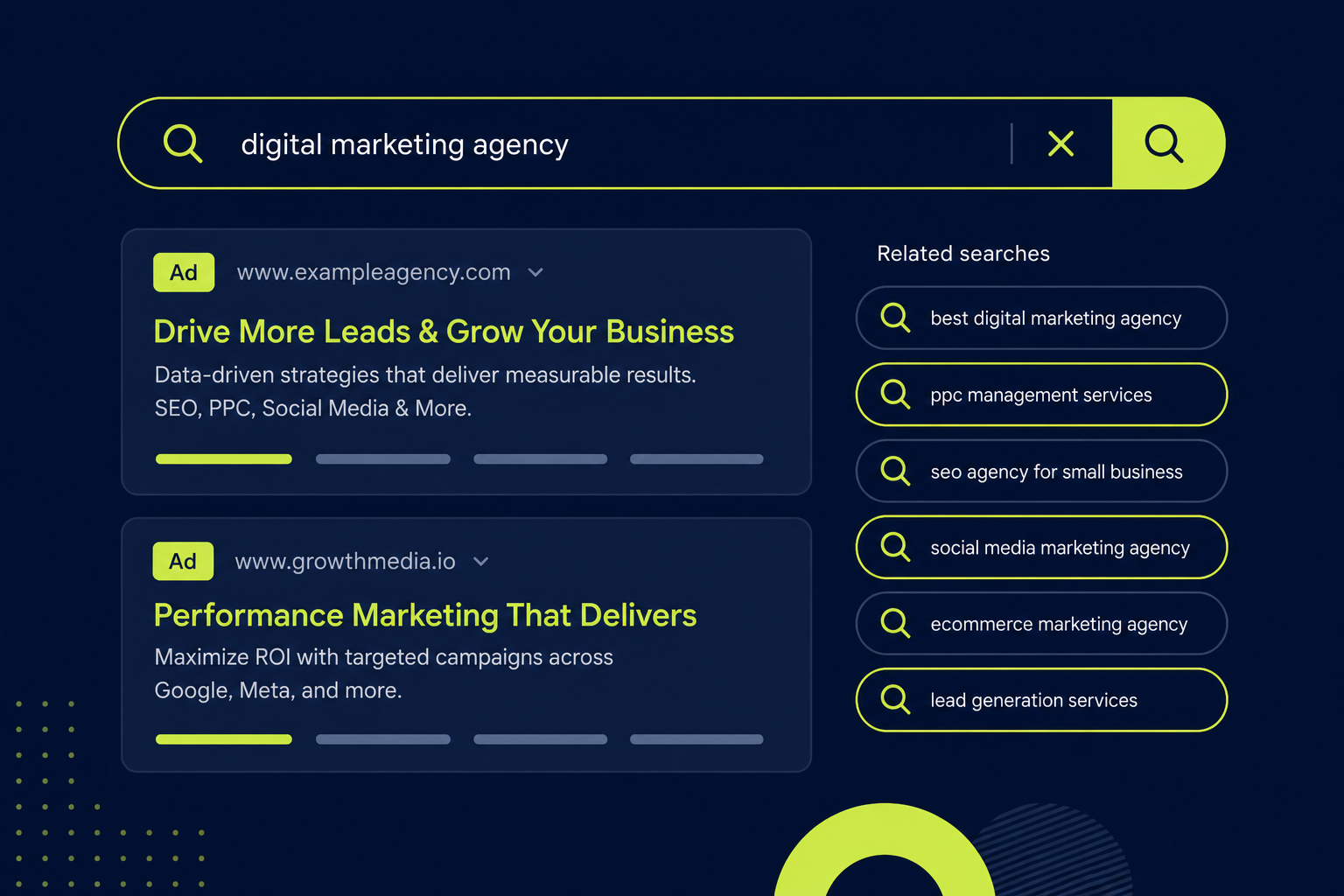
Commercial searches around ads target management, setup, and performance – not theory.
| Cluster | Example keywords | Intent | Focus |
|---|---|---|---|
| Google Ads / SEA | Google Ads, SEA, search ads | commercial / transactional | capture demand |
| Social ads | Meta Ads, social media ads, performance marketing | commercial | awaken demand |
| Quality | ad copy, landing page ads, conversion ads | commercial | message + page |
| Management | Google Ads agency, ads optimization, fair billing | transactional | scope & billing |
Why most campaigns fail at the wrong end
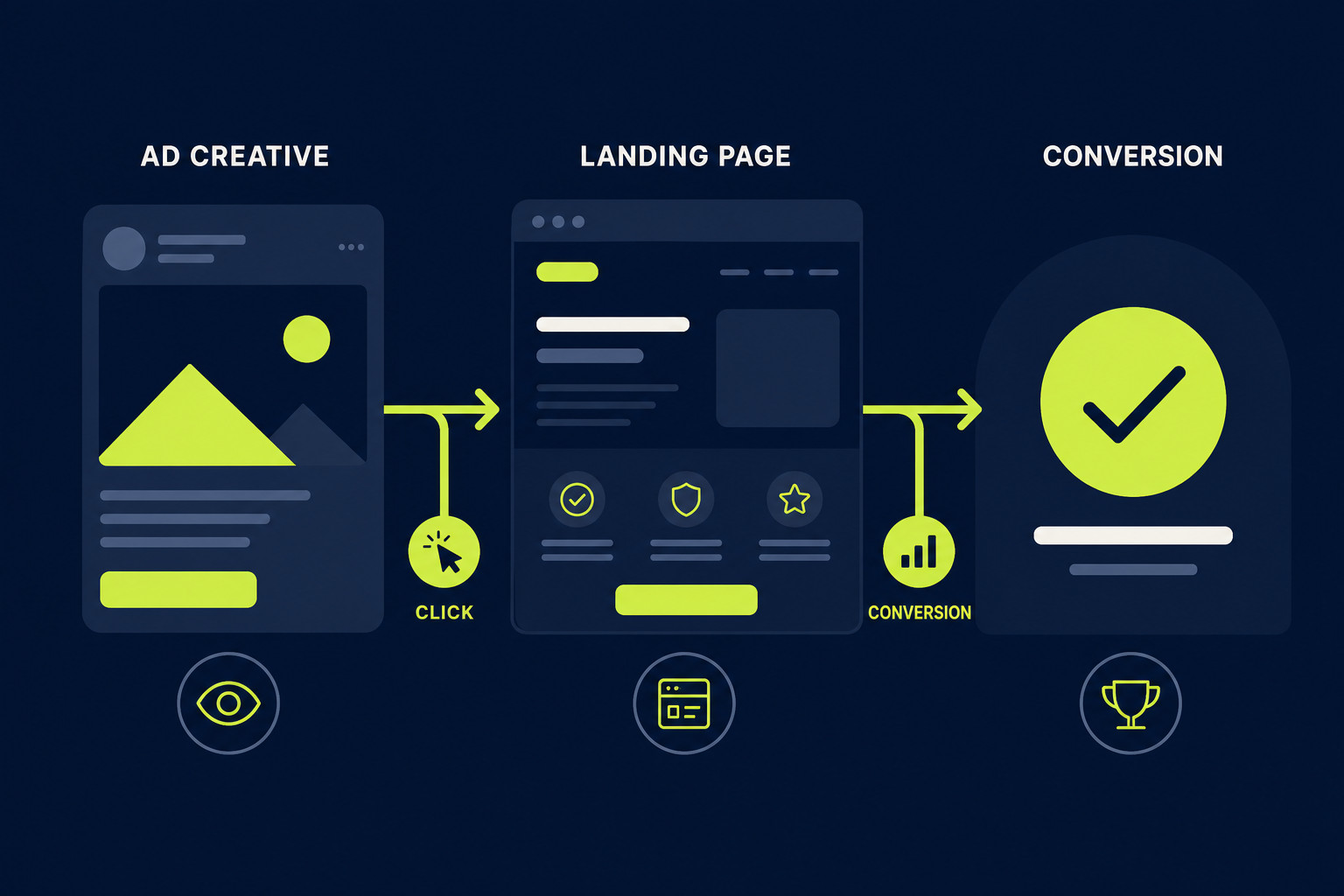
When ads don't work, budget often gets raised first. Usually the problem is elsewhere: wrong message, unclear offer, landing page doesn't deliver what the ad promises. More budget then only amplifies the mistake.
I look at the whole chain – from ad to action. Only when it's coherent does scaling pay off.
Google Ads and social ads: two logics
Google Ads reaches people with acute demand. Decisive: matching keywords, clean negatives, ads precisely on intent. Meta Ads awaken demand among matching audiences – that demands strong creatives and an offer instantly understandable while scrolling.
SEA lives on precision: each ad group addresses one search intent. Informational keywords need different copy than purchase-close terms. Whoever throws everything into one account pays for clicks without intent. We structure campaigns so you see which topics bring inquiries – and which only traffic.
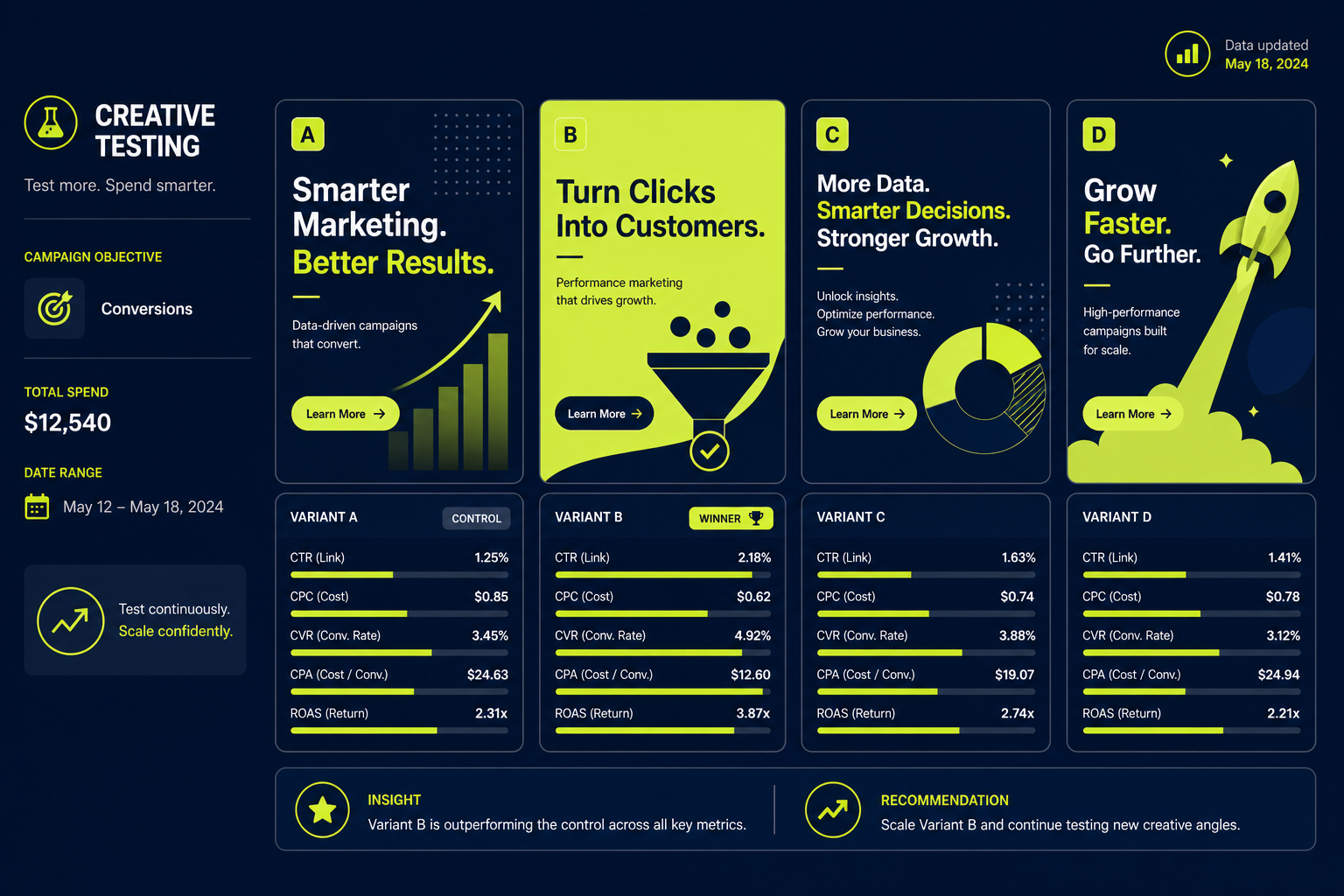
Meta Ads need speed and clarity. The offer must be understood in image and text in under two seconds. Hook, benefit, social proof, CTA – then the landing page fits. Retargeting can work when organic content and social media tell the same story.
Often both complement each other. In consulting we clarify where your budget is best placed first – and whether organic channels like SEO make parallel sense.
- Campaign concept: Audiences, messages, and structure aligned with your offer.
- Ad copy & creatives: Copy and image ideas that stand out and lead to clicks.
- Matching landing pages: Target pages that deliver the promise and lead to action.
- Ongoing optimization: Test and adjust – once data is there.
Landing pages that deliver on ads
The landing page is where most campaigns fail – not the ad. Whoever clicks to a homepage explaining ten offers at once loses intent. Whoever lands on a page that doesn't repeat the ad promise loses trust.
A conversion-ready landing page for ads contains: the same core message as the ad, a clear offer, social proof, objection handling, a visible CTA, and little distraction. Navigation can be reduced; focus is on one action.
Google Ads and Meta Ads have different expectations. Search users arrive with a question – the page answers it quickly and leads to inquiry. Social users were interrupted – the page must show relevance in seconds for why they should keep reading.
Landing pages aren't a one-off project. When CTR is fine but inquiries missing, we test headlines, form length, proof elements, and mobile presentation. Often small adjustments help more than a full relaunch. Bigger jobs we solve via web development or conversion optimization.
Performance marketing doesn't end at the click. Cost per inquiry, close rate, and – where measurable – revenue per channel decide whether scaling makes sense. That's why I document which landing page belongs to which ad group and when a split test makes sense.
Fair billing, transparent steering
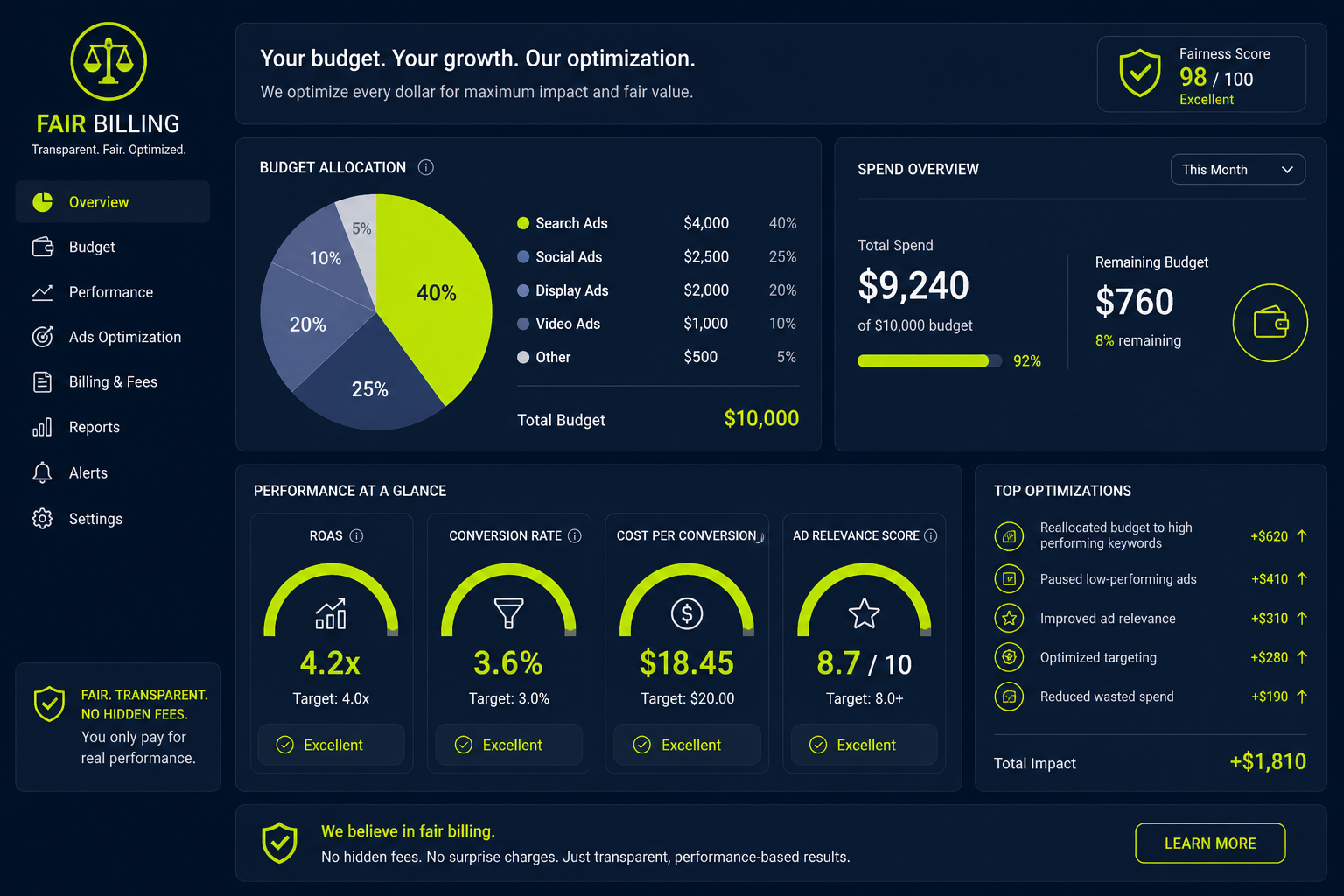
I bill by effort, not a percentage of your ad budget. That sets the right incentives: my goal is efficient budget – not the largest possible budget.
You decide scope: concept and copy only, or setup and ongoing management. Both are possible.
Transparent also means: you keep access to Google Ads, Meta Business Manager, and Analytics. No opaque intermediary accounts. Reports explain what happened and what gets tested next – without a jargon wall.
Performance marketing without vanity metrics
Performance marketing is often confused with click counts. Clicks without inquiries are expensive curiosity. Impressions without relevance are noise. I steer toward inquiries, qualified leads, or – where sensible – revenue, not CTR alone.
Clean tracking is prerequisite: conversion events, UTM parameters, clean separation of brand and non-brand traffic in Google Ads, clear attribution in Meta Ads. Without that you optimize on chance.
Testing needs discipline: one hypothesis per test, enough runtime for data, clear stop rules. Whoever rebuilds the account weekly learns nothing. Whoever never tests stagnates. Between those lies the productive rhythm – usually one targeted adjustment every two to four weeks.
Channels reinforce each other when messages are consistent. SEO delivers organic ground, social media builds trust, ads accelerate what already works. AI Search & GEO benefits from clear offer pages ads point to.
When a campaign isn't economically viable, I say so openly. Then we stop or rebuild – instead of pushing budget out of habit. That saves money and creates room for measures that really carry.
When ads make sense – and when not
Makes sense with clear demand, testable offer, and a page that can convert. Less sensible when the website is still unclear or the offer isn't tangible – then foundation and conversion first, otherwise you pay tuition.
Google Ads pay off especially when people actively search for your service. Meta Ads pay off when you have an understandable offer and can describe audiences clearly. Both need patience in the learning phase – usually two to four weeks until first reliable decisions are possible.
We start with a free intro call.
Setup, tracking, and ongoing optimization
Without clean conversion tracking you steer in the fog. We clarify goals, events, and – where needed – Analytics connection. Only then can bids, audiences, and creatives be evaluated sensibly.
Ongoing optimization means: maintain keywords and negatives, test ad copy, sharpen audiences, follow up landing pages, shift budget where inquiries arise. Not rebuild the account weekly, but learn with discipline.
Especially in 2026 first-party signals and clear offer messages count more than tricks. AI-supported campaign types can help – but they don't replace strategy or a conversion-capable page.
Typical warning signs: high CTR without inquiries, expensive clicks on informational keywords without purchase intent, a homepage as catch-all landing page, creative tests without hypothesis. In those cases we stop the burn and fix the chain.
Ads work best in interplay: SEO for sustainable ground, social for reach and trust, CRO for the target page. I orchestrate so channels don't cannibalize but reinforce.
A realistic start often looks like this: tight keyword or audience set, 2–3 message variants, one clearly matching landing page, clean tracking, two-week learning phase, then first hard decisions (pause, sharpen, scale). Whoever rebuilds the account in week one prevents learning.
Negative lists and exclusions matter as much as positive keywords in Search. Without them you pay for curiosity clicks, informational searches without purchase intent, or irrelevant placements. In Social tight creatives and clear offer boundaries protect against expensive scatter.
I keep reporting understandable: what was spent, which inquiries came, what an inquiry costs, which levers come next. No 20 slides of vanity metrics. When a campaign isn't economically viable, I say so – and we stop or rebuild instead of pushing budget out of habit.
Legally and organizationally we clarify access, brand assets, and approval paths upfront. You keep control of ad accounts and budgets. I work transparently in your accounts or with clearly documented handoffs – without lock-in effects.
Your benefit
What Paid Ads does for you
Fast visibility
Unlike SEO, ads work immediately – ideal under time pressure.
Budget with impact
Message, offer, and landing page interlock.
Fair billing
By effort instead of budget share – incentives align.
Flexible scope
From concept and copy to full management.
Is this a fit?
Who this is especially for
- Companies that quickly need more inquiries
- New offers or campaigns under time pressure
- Campaigns that cost a lot and deliver little
- Providers who want to combine ads and SEO sensibly
FAQ
Answers about Paid Ads
That depends on goal, market, and competition. More important than absolute size is efficient use. We start in a sensible range, collect data, and scale only when the campaign provably generates inquiries.
Depends on your offer. Google hits people with acute demand, social awakens demand among matching audiences. Often both complement each other. In consulting we clarify where budget is best placed first.
Yes. Concept and ad copy are possible; so is full setup and ongoing optimization. We choose scope that fits you.
First clicks often within days. Reliable statements on economics need a bit more time because we must collect enough data for sensible decisions.
No. I bill by effort – so incentives favor efficient budget, not the highest possible ad spend.
Then fix page and message first – via conversion optimization or web development. Otherwise ads burn money no matter how good the ad copy is.
More services
Let’s move your project forward
The intro call is free and no-obligation. No contract pressure – just an honest assessment on equal footing.