
AI Search & GEO
Generative Engine Optimization for ChatGPT, Perplexity & AI Overviews
Generative Engine Optimization (GEO) and AI Search: structure content so AI systems cite you as a source – complementary to classic SEO.
Short answer
AI Search means search systems that deliver ready-made answers instead of link lists – such as ChatGPT, Perplexity, Gemini, and Google AI Overviews. Generative Engine Optimization (GEO) prepares your content so these systems cite you as a reliable source. SEO remains the foundation; GEO adds citability.
The way people find information is shifting. Instead of ten blue links, AI systems formulate an answer and decide which sources to draw on. For you as a business, that means visibility no longer comes only from rankings, but from whether you appear in that one answer.
That's exactly where I come in. With AI Search and GEO, I make sure your expertise is machine-readable, clear, and citable – often based on existing content, supplemented with structure, FAQ, and schema. If the technical foundation isn't there, a modern rebuild via my web development is often the faster route; you can estimate costs with no obligation in the website calculator.
Keyword and demand map for AI Search & GEO

For topic planning, I separate search terms by intent. Classic keyword tools still map AI demand incompletely – but you still need clear clusters so content and service pages don't write into a void.
Generative Engine Optimization therefore doesn't start with prompt hacks, but with an honest question list: What does your target audience want to know before they inquire? Which terms show up in ChatGPT, Perplexity, or Google AI Overviews when someone searches for your service? From that I derive topics that serve both classic search engine optimization and AI Search – without producing duplicate content.
Commercial-intent clusters are especially important: terms like "GEO agency," "AI Search consulting," or "get found in ChatGPT" signal purchase interest. Informational clusters like "What is Generative Engine Optimization" build trust and authority. Both belong together – but shouldn't be mixed on the same page.
| Cluster | Example keywords | Intent | Focus |
|---|---|---|---|
| Entry / definition | AI Search, What is AI Search, AI search | informational | clear explanation + SEO distinction |
| GEO term | Generative Engine Optimization, GEO SEO, GEO optimization | informational / commercial | methods, practice, distinction from AEO |
| Platform | Google AI Overviews, ChatGPT SEO, get found in ChatGPT | informational / transactional | platform-specific levers |
| Outcome | get cited in AI answers, AI visibility | commercial | monitoring, measures, cases |
Why classic SEO alone is no longer enough
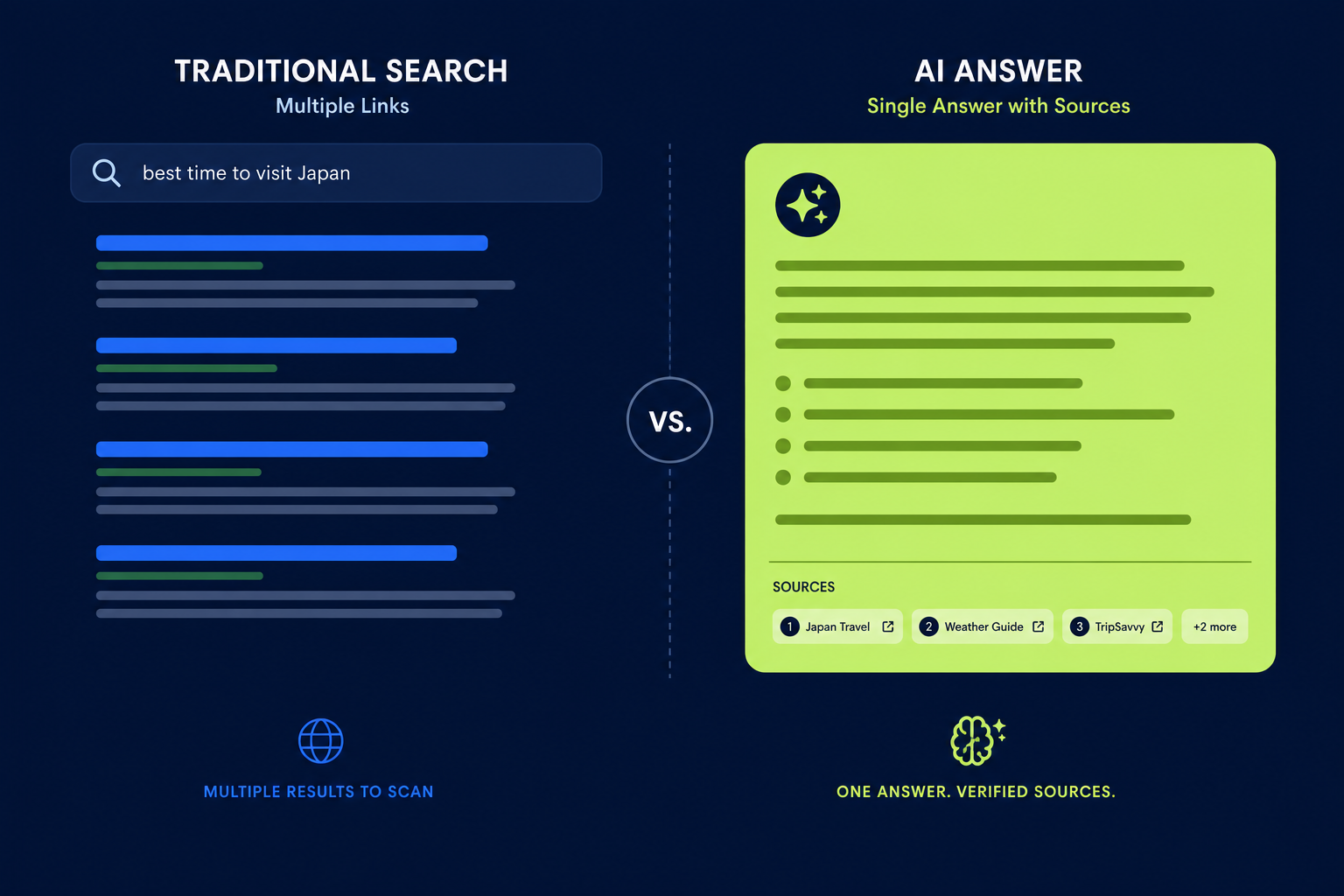
For years the goal was clear: rank as high as possible on Google so people click. That model still works – but it's getting competition. More and more queries are answered directly in an AI response. This is called zero-click: the information arrives, the click doesn't.
According to SISTRIX (analysis across 100 million keywords, February 2026), AI Overviews appear in Germany for roughly 20% of keywords. When an Overview sits at the top, click-through rate on position 1 drops from about 27% to 11%. Aggregated, SISTRIX puts the effect at around 265 million lost organic clicks per month in Germany.
That doesn't mean SEO is dead. A solid search foundation is the prerequisite for AI systems to find you at all. But optimizing only for rankings is no longer enough. You also need content that works in generative answers.
Separating SEO, AEO, and GEO clearly
SEO targets rankings and organic clicks in classic results. AEO (Answer Engine Optimization) targets direct answers, snippets, and voice. GEO (Generative Engine Optimization) targets mention and citation in AI-generated answers – ChatGPT, Perplexity, AI Overviews, Gemini.
GEO doesn't replace SEO. Many generative systems draw on indexed, authoritative web sources. Weak tech, thin content, and unclear entities hurt in both worlds. GEO builds on SEO and shifts focus from keyword density to fact density, structure, and citability.
The Princeton work on GEO (Aggarwal et al., 2023) showed experimentally that targeted content adjustments can increase visibility in generative answers by up to roughly 40% – while keyword stuffing helps little there. Not a guarantee for your niche, but a solid signal: different levers work.
ChatGPT, Perplexity, Gemini, and Google AI Overviews
Not every AI search works the same way. ChatGPT and Gemini often draw on trained knowledge and sometimes web search – depending on mode and date. Perplexity almost always cites with source links. Google AI Overviews appear directly in classic search and measurably change click behavior.
For GEO that means: you need content that holds up in multiple contexts – clearly formulated, verifiable, with an unambiguous entity. Whoever optimizes for only one system quickly loses overview. That's why I work with a prompt set from your industry: What questions does the target audience ask? Who gets named? Which sources does the system cite?
Google AI Overviews are the fastest lever for many businesses because they build on the same index base as classic SEO. ChatGPT visibility relies more on brand awareness, mentions, and consistent facts on the web. Both reinforce each other – when the foundation is right.
Monitoring therefore distinguishes between "named in the answer," "linked as a source," and "not on the radar at all." Only then do you see whether GEO is working or structure, authority, or content gaps remain.
How I approach AI Search & GEO
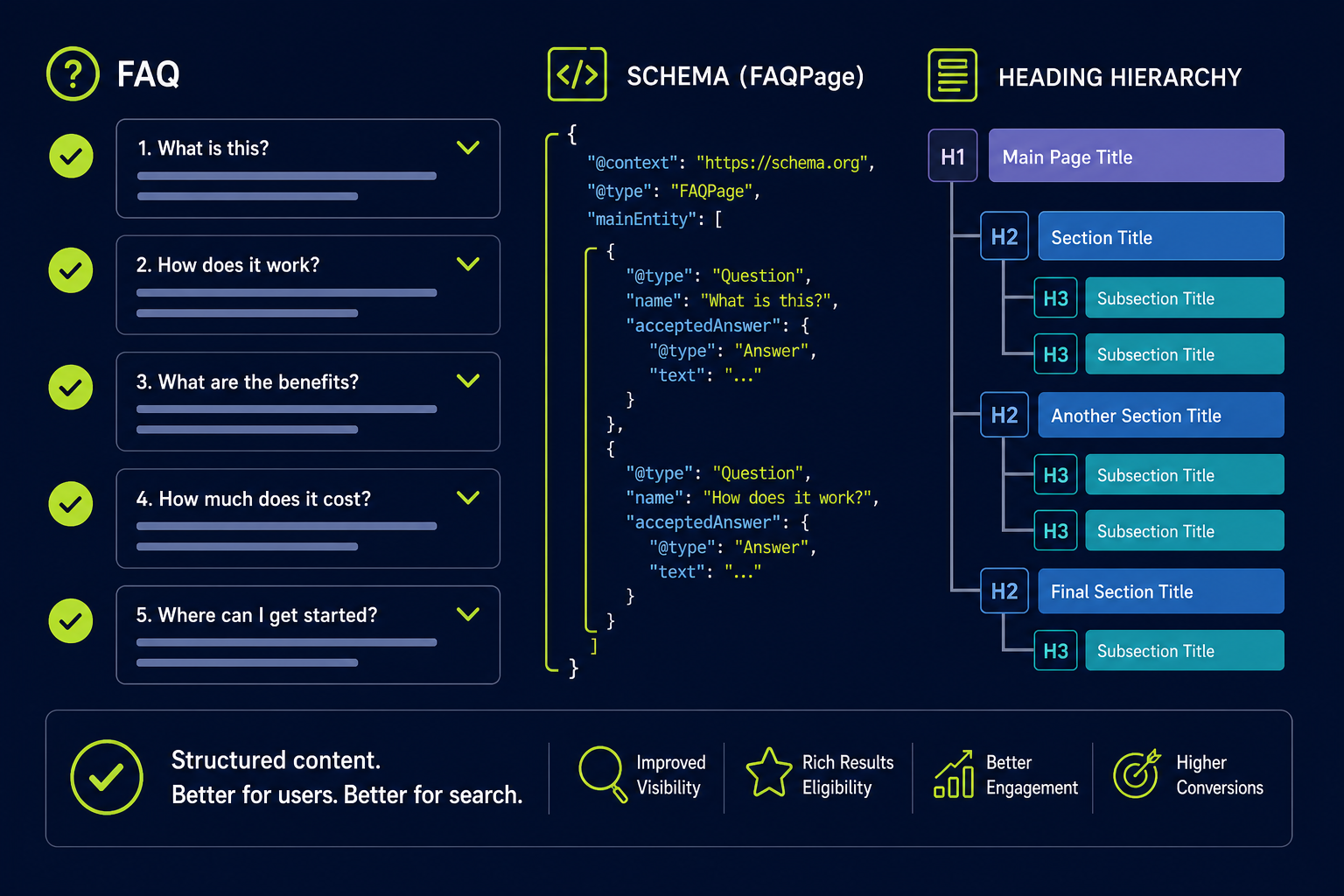
I work along a clear process. None of it is magic – it's thorough work on content, structure, and tech.
- Analysis: I check whether and how you appear in AI answers and classic search – and where your target audience actually asks.
- Question map: We collect real customer questions and prompt patterns. From that come prioritized topics for citable answers.
- Sharpen content: Existing copy gets more precise, supplemented with FAQ and answer-first blocks, and improved where it's too vague.
- Technical foundation: Structured data, semantics, and machine-readable signals ensure AI can classify you unambiguously.
- Measure & adjust: We observe mentions and steer based on data – no blind flying and no placement promises.
Citable content: the core of GEO
AI systems prefer to cite passages that answer a concrete question cleanly in a few sentences. That's why we develop typical questions and formulate clear, reliable answers – short enough to cite, precise enough to convince.
A good GEO block is understandable on its own, precise, bounded, and verifiable. Bad: "We offer solutions for modern companies." Better: "GEO optimizes content to be named or cited in AI-generated answers – complementary to classic SEO, which targets rankings and clicks."
Often the knowledge is already in your head or in existing copy. We prepare it so humans and machines understand it immediately – without watering down your depth of expertise.
Tech, authority, and monitoring
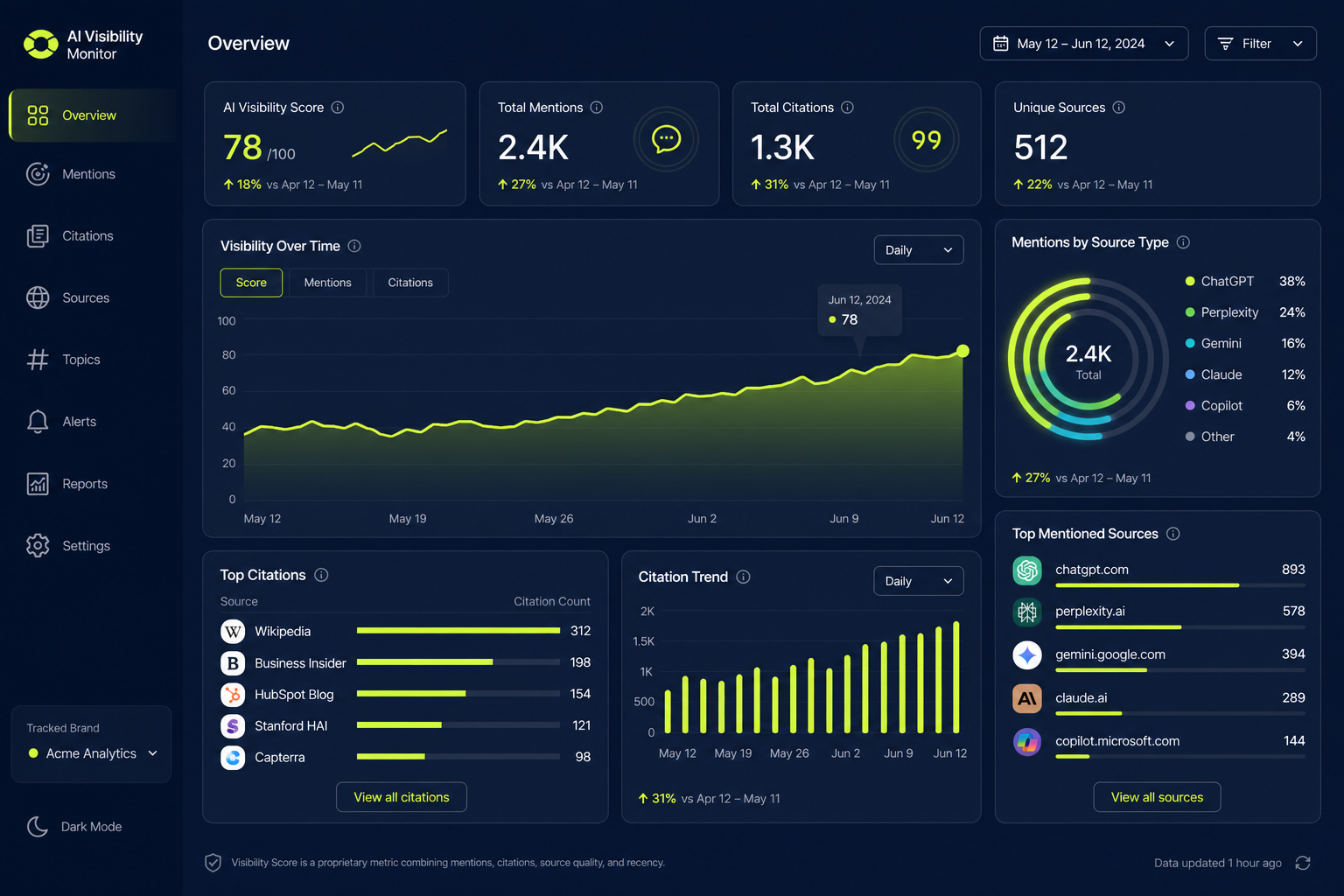
The technical base includes Schema.org (Organization, Person, FAQPage, Article, Service), clean headings, fast crawlable pages, and SameAs references where useful. What helps AI usually helps Google too – you build a foundation for both worlds.
Authority doesn't end on your domain. Mentions on relevant third-party sites, consistent company data, and real expertise act as trust signals. GEO without brand and off-page signals remains piecemeal.
Without measurement, GEO is marketing theater. We define a prompt set, check mentions on a sample basis, read Search Console, and derive concrete next steps. More in the Insights article on AI Search.
What you shouldn't do
Rewrite everything just because GEO is trendy – often sharpening, FAQ, structure, and schema are enough. Keyword stuffing as a GEO measure helps little. Guarantees for ChatGPT placements are disreputable. Only producing blog posts while service pages stay vague misses the lever. Ignoring tracking means steering in the fog.
If you're unsure where you stand, a marketing audit or a free intro call is worth it first.
Practical checklist: Are you AI-search-ready?
Go through your most important pages and check honestly: Is the core message in the first paragraphs? Is there at least one citable short answer? Are H2/H3 readable as topics or questions – not as marketing slogans? Does FAQ exist with real customer questions? Are offer, target audience, and entity clear? Is structured data present? Does the text feel verifiable – or just full of fluff? Is the page fast and crawlable without login? Do About, imprint, and external profiles match? Have you manually checked in the last 30 days whether you're named for core prompts?
Few yes answers mean: foundation first. Many yes answers mean: iterate, build authority, and make monitoring routine. GEO isn't a one-off project but a learning process – that's exactly how I set up the collaboration.
Local providers benefit especially when they name location, service, and trust clearly. Regional questions increasingly land in AI answers too. Here Local SEO and GEO interlock: a clean Google Business Profile, local service pages, and consistent NAP data feed the same entity graph generative systems draw from.
Content formats that pull especially well: definitions, comparison tables, process steps, honest price or effort ranges, checklists, and real FAQ. Weaker: opinion essays without facts, image copy without substance, tool lists without evaluation criteria. If you're unsure which formats have the biggest lever for you, we clarify that in the audit or intro call – and implement with priority.
For decision-makers, metric romance matters less in the end than whether inquiries and interpretive authority rise. That's why I always connect GEO to business goals: Which questions does the target audience ask before buying? Which answers must we own? Which pages carry them?
If competitors already appear in AI answers, we analyze their patterns – structure, fact density, authority – and build toward them deliberately, without copying. First-mover advantage is real, but not unreachable. System beats panic.
Your benefit
What AI Search & GEO does for you
Visible in AI answers
Content prepared so ChatGPT, Gemini, Perplexity, and Google AI Overviews can cite you as a source.
Edge over competitors
While many only watch classic rankings, you position early for tomorrow's search.
Double benefit
The optimization strengthens your classic SEO at the same time – you benefit in both worlds.
Honest measurability
No blind flying: we observe mentions and steer based on data.
Is this a fit?
Who this is especially for
- Service providers and consultancies who want to be found as experts in their niche
- Local businesses that want to appear in regional AI answers
- Companies with offers that need explanation, whose target audience asks questions first
- Websites with good content that hasn't been prepared in a citable way
FAQ
Answers about AI Search & GEO
No. SEO targets rankings and clicks in classic search results. Generative Engine Optimization targets mention and citation in AI answers – e.g. in ChatGPT, Perplexity, or Google AI Overviews. A solid SEO base is the prerequisite for good GEO, because many systems still use indexed web sources. That's why I look at both together instead of treating GEO as an isolated trend topic.
Usually not. Often more precise wording, FAQ, structure, and schema are enough. On outdated sites, a rebuild is often more efficient – costs in the website calculator.
Honestly: no. What works: systematically making content more citable, measuring, sharpening – and thus measurably improving the odds.
Structural improvements often in weeks. Stable mentions across multiple systems usually take longer – more like a 1–3 month learning cycle than "position 1 next week."
Blog helps with depth. Without a clear entity, strong service pages, and consistent facts, the effect stays limited. GEO is a system, not a single post.
Best with a free intro call. Optionally I first check status and priorities in the marketing audit.
More services
Let’s move your project forward
The intro call is free and no-obligation. No contract pressure – just an honest assessment on equal footing.